
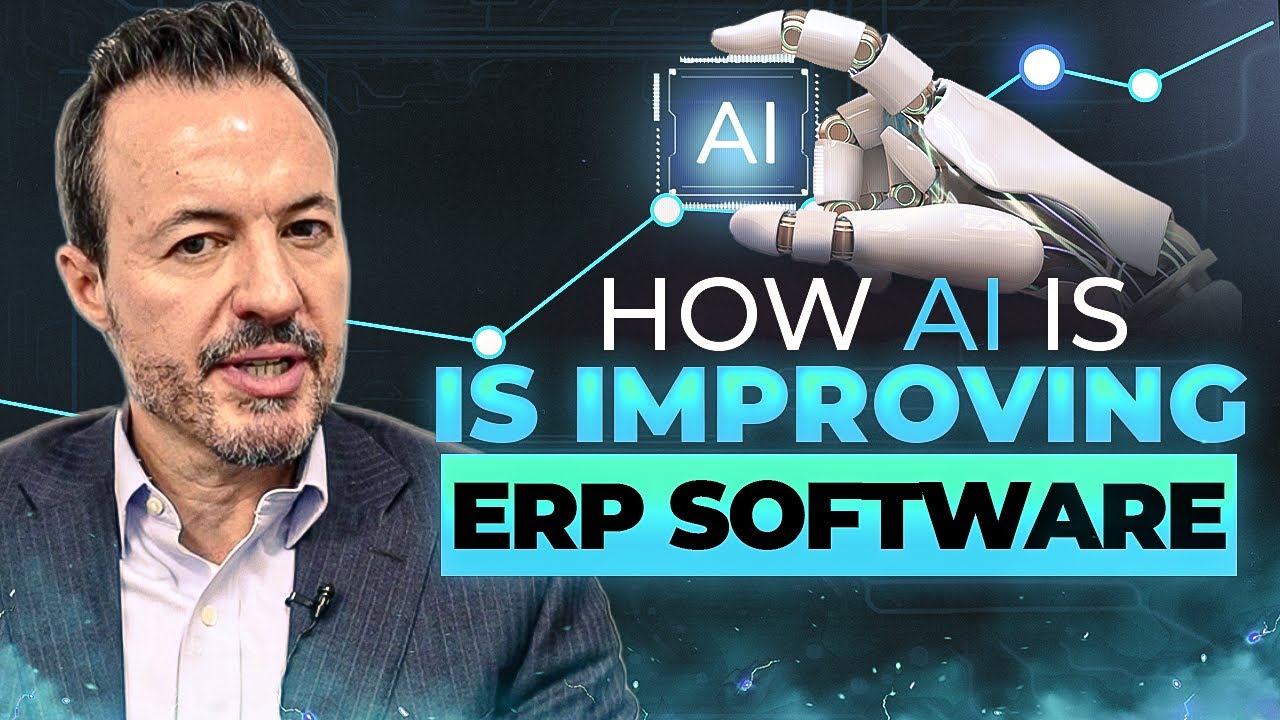
Artificial intelligence is becoming one of the most significant forces reshaping the enterprise technology space. Every major ERP vendor is racing to embed AI capabilities into their platforms, and organizations are increasingly evaluating these systems on the basis of their AI roadmap. But what does AI in ERP actually mean? Where does it deliver real value, and where is it still hype? This post explains how AI is changing ERP software, what to look for when evaluating platforms, and how to approach AI in your broader transformation strategy.
What Is AI in ERP Software?
AI in ERP refers to the use of computer systems and applications that perform tasks traditionally requiring human intelligence: learning, reasoning, decision-making, and pattern recognition. The application of AI in ERP and broader enterprise software is diverse and expanding rapidly. Here are the key areas where AI is making the biggest impact:
Machine Learning and Data Analysis
AI can analyze massive datasets quickly and accurately, identifying patterns, trends, and correlations that would be impossible to surface through manual analysis. This is particularly valuable in market research, customer behavior analysis, financial reporting, and inventory management.
Automation of Routine Tasks
AI automates repetitive, rules-based work like data entry, scheduling, and routine email responses. This increases efficiency and frees employees to focus on more complex and strategic activities.
Customer Relationship Management
AI enhances customer service through chatbots, virtual assistants, and intelligent routing. These tools handle routine queries in real time, escalate complex issues to human agents, and improve overall customer experience.
Predictive Analytics
AI uses historical data and external variables to forecast future trends and behaviors. This is particularly valuable for inventory management, demand forecasting, financial planning, and strategic decision-making.
Decision-Making Support
AI provides data-driven insights to support decisions that previously relied on intuition or limited information. It can identify risks, surface opportunities, and recommend optimal courses of action across operational and strategic domains.
Personalization
AI enables organizations to tailor experiences to individual customers based on their behavior, preferences, and history. Applications include marketing personalization, e-commerce recommendations, and dynamic content delivery.
Human Resources and Talent Management
AI streamlines HR processes by sorting applications, identifying high-potential candidates, monitoring engagement signals, and personalizing training programs. It can also surface workforce trends that human reviewers might miss.
Fraud Detection and Risk Management
AI excels at identifying anomalies that indicate fraudulent activity, suspicious transactions, or security threats. In finance, banking, and cybersecurity, AI-driven detection has become significantly faster and more accurate than rules-based approaches alone.
Supply Chain and Operations Optimization
AI helps optimize supply chain operations by predicting disruptions, optimizing delivery routes, managing inventory levels, and supporting predictive maintenance in manufacturing environments.
Integration with Industry 4.0
AI combined with the Internet of Things creates intelligent operations. Sensors capture real-time data on equipment, products, and environments, and AI analyzes that data to predict maintenance needs, identify quality issues, and optimize production schedules.
AI in ERP: A Game Changer
All major ERP vendors are investing heavily in AI integration. Some have built mature capabilities. Others are still marketing their future vision. Either way, the direction is clear: AI is becoming a core part of how ERP platforms deliver value, not an optional add-on. Here are four ways AI is changing what ERP can do:
Data Utilization at Scale
AI enables organizations to leverage the massive amounts of data accumulated in ERP systems over decades. It is not limited to internal data either. AI can integrate external sources like macroeconomic indicators, weather patterns, supplier risk signals, and market intelligence to enrich predictive models and decision support.
Conversational and Generative AI
Many ERP vendors are embedding conversational AI that lets users interact with the system in natural language. Instead of navigating complex interfaces, users can ask questions, request reports, or trigger workflows the way they would converse with a tool like ChatGPT. This is reshaping who can effectively use an ERP system and how quickly they can get value from it.
Creative Data Analysis
AI opens new possibilities for analyzing and visualizing data. Users can request custom visualizations, compare datasets in unconventional ways, and explore correlations that traditional reporting would miss. This requires a shift in how employees think about using ERP systems, but the upside is significant for organizations that embrace it.
Third-Party AI Solutions
Beyond the AI built directly into ERP platforms, organizations can deploy standalone AI solutions that work alongside their core systems. This is particularly useful when an ERP vendor’s AI capabilities are still maturing or when specialized use cases require deeper functionality than the platform provides natively. When we advise clients on AI implementation, we often recommend hybrid approaches that combine vendor capabilities with best-of-breed AI tools.
The Intersection of AI and Cloud Computing in ERP
The shift to cloud-based ERP is closely tied to the rise of AI in this space. Cloud computing provides the standardized data model, scalable infrastructure, and integration flexibility that AI requires to function effectively. Cloud platforms also make it significantly easier to integrate external data sources like IoT devices, third-party APIs, and partner systems, all of which feed AI capabilities.
Organizations still operating on legacy on-premise ERP systems often find themselves at a disadvantage when it comes to AI adoption. The data is harder to consolidate, the architecture is harder to extend, and the integration with modern AI tools is more complex. This is one of many reasons cloud migration is now a strategic priority for organizations planning long-term ERP modernization.
How to Evaluate AI Capabilities During ERP Selection
As AI becomes a major selling point, evaluating ERP platforms requires sharper questions than it did even a few years ago. Here is what we recommend asking during the selection process:
- What AI capabilities are live today vs. planned? Vendors often blend current functionality with future vision. Get specific about what is shipping versus what is on the roadmap.
- What data powers the AI? Is it your data, aggregated customer data, or something else? Who owns the resulting models?
- How does the AI handle bias and fairness? Especially relevant for HR, credit, or customer-facing decisions.
- What integration is required to use the AI features? Some vendors require specific cloud configurations or data structures.
- How are AI features priced? Some are included, others are premium add-ons. The economics can vary significantly across vendors.
In our experience, the organizations that ask these questions early in the selection process avoid the common trap of adopting AI features they cannot actually use or do not actually need.
Looking Ahead: AI’s Role in ERP Evolution
AI is not just a buzzword. It is a transformative force in the ERP space, and the way organizations use these systems is changing fundamentally.
Within the next few years, expect:
- Conversational interfaces becoming the default rather than the exception
- AI-driven automation handling a growing share of routine transactions
- Predictive capabilities embedded throughout planning, forecasting, and operations
- Tighter integration between ERP, IoT, and external data sources
- Stronger governance frameworks around AI bias, transparency, and accountability
Organizations that build AI thinking into their broader digital transformation strategy will capture significantly more value than those that treat AI as a separate initiative bolted onto an existing system. Getting these decisions right starts during Phase 0 planning, before vendor selection begins.
Questions We Hear Most
Should You Wait for AI Capabilities to Mature Before Selecting an ERP?
No. ERP platforms have multi-year selection and implementation cycles, and AI is evolving fast enough that waiting for the perfect AI feature set means waiting forever. Instead, evaluate platforms on the strength of their current functionality and the credibility of their AI roadmap. Choose vendors that are investing seriously in AI as a strategic priority rather than treating it as a marketing checkbox.
Will AI Replace the Need for ERP Customization?
In some areas, yes. AI’s ability to flex around different process variations means that some workflows that previously required customization can now be handled through configurable AI behavior instead. But customization is not going away entirely. Core competencies, regulatory requirements, and unique process needs still benefit from deliberate customization. The right approach is to use AI to reduce customization where it makes sense and reserve customization for the processes that genuinely differentiate your organization.
How Do You Avoid Vendor Lock-In with AI in ERP?
Ask vendors directly what rights they have to your data when it is used for AI training. Confirm that you can extract your data cleanly if you ever change platforms. Consider hybrid AI strategies that combine vendor capabilities with independent tools you control. And invest in internal AI capability so you are not entirely dependent on any single vendor’s roadmap.
If you are evaluating ERP platforms or planning your AI strategy, contact us at eric.kimberling@thirdstage-consulting.com.

Eric is recognized globally as a leading voice in digital transformation and ERP strategy. Over the past two decades, he has helped hundreds of organizations – including Nucor Steel, Fisher & Paykel Healthcare, Kodak, Coors, Boeing, and Duke Energy – define their technology roadmaps, modernize complex operations, and deliver real business value from large-scale transformation initiatives.
As Founder and CEO of Third Stage Consulting, Eric leads an independent, technology-agnostic advisory firm focused on helping clients navigate the shift from traditional ERP to more flexible, AI-enabled Digital Enterprise Operations (DEO) models. His work spans ERP selection, implementation quality assurance, organizational change, and operating model design across a wide range of industries and geographies.
Eric is also a prolific thought leader, known for his pragmatic takes on AI, cloud, and enterprise software trends, as well as his firm’s benchmark research and frameworks for de-risking transformation. He is dedicated to helping executive teams cut through vendor hype, make confident investment decisions, and successfully reach the “third stage” of their digital evolution.