Cloud ERP has become the default path for enterprise software.
Most ERP vendors are cloud-first. Most buyers start with cloud options by default. Many organizations now assume cloud is simply the modern, safer, more scalable choice.
There are real benefits to cloud ERP. But there is also a side of this trend that the market is not talking about enough: the long-term risks.
The concern is not that cloud ERP is “bad.” The concern is that organizations are moving so aggressively toward cloud deployments that they may be creating serious blind spots that won’t fully show up until the 2030s.
If leaders do not think more strategically about control, cost, flexibility, and competitive differentiation, many organizations may find themselves locked into expensive, rigid systems that no longer fit the business.
The Market Has Moved to Cloud – Fast
Over the last decade, the ERP market has marched aggressively toward cloud deployments.
In many cases, on-premise options are less available than they used to be. Cloud-native providers such as NetSuite, Salesforce, and Workday have proven that cloud solutions can scale and generate strong recurring revenue. As a result, the entire software ecosystem has followed suit.
Vendors benefit from this model.
Investors benefit from this model.
In many cases, buyers also benefit from this model, at least initially.
The issue is what happens later.
The biggest risks of cloud ERP often do not show up during software selection or early implementation. They show up years later, when the business evolves, the vendor’s roadmap changes, and the organization realizes it has far less control than it expected.
Risk 1: Organizations Are Giving Up Too Much Control
One of the biggest long-term risks with cloud ERP is the loss of control.
To be fair, software vendors have always controlled how their products are built. That is not new. What is different now is the level of flexibility customers have after the fact.
With traditional on-premise systems, organizations had more room to adapt. If the software had limitations, companies could customize it. They could make changes to better align the system with their operations.
In cloud environments, that flexibility is often much more limited.
That means organizations are increasingly dependent on vendor decisions, not just today, but for years to come.
A feature that works well now may be changed later.
A module that is critical to your business may be deprioritized.
A capability you built your operations around may eventually be discontinued.
These decisions may make sense for a vendor’s broader customer base, but they may be damaging for your organization.
That is the core risk: your business strategy and the vendor’s product strategy will eventually diverge.
It is not a question of if.
It is a question of when.
Risk 2: Cloud ERP Costs Are Often Higher Than Expected
Cloud ERP was originally marketed as a cheaper alternative to on-premise software.
In practice, many organizations have found the opposite.
Cloud software often costs more over time than on-premise ever did. Even if a cloud platform delivers business value, the net cost paid to the vendor is often significantly higher than leaders anticipated.
Why?
Because cloud ERP is not a one-time purchase. It is an ongoing subscription model with recurring costs that do not go away. In many cases, those costs increase over time based on contract terms, usage, modules, user counts, storage, integrations, and vendor pricing changes.
It is similar to leasing a car: the payments continue, and the organization may have limited leverage later.
The key mistake many organizations make is evaluating cloud ERP based only on year-one subscription costs.
The better approach is to evaluate the full long-term cost trajectory, including:
- Subscription escalations
- Add-on modules
- Integration and support costs
- Vendor-driven pricing changes
- Future migration costs if the system no longer fits
Cloud ERP can still be the right choice. But organizations need to go in with a realistic view of lifetime cost, not just implementation cost.
Risk 3: Companies May Lose Their Intellectual Property
This is one of the most overlooked risks in cloud ERP migrations.
When organizations move away from heavily customized on-premise environments, they often assume they are just “cleaning up” old technology. In some cases, that is true.
But in many others, they are also stripping out the very workflows that made them competitive.
Not all customization is bad.
Some customization is just noise: personal preferences, legacy habits, or unnecessary complexity. That is worth eliminating.
But some customization reflects something much more important: your secret sauce.
These are the operational workflows, decision logic, and process designs that make your business different from competitors. They are often embedded in the way your systems were configured over time.
When organizations move to rigid cloud models and blindly adopt “best practices,” they may accidentally standardize away their competitive advantage.
This is especially dangerous when leaders treat cloud migration as a technical exercise rather than a business strategy decision.
The real question is not, “How do we move to the cloud fastest?”
It is, “How do we preserve what makes us unique while modernizing our technology?”
Risk 4: Cloud ERP Reduces Flexibility Over Time
On-premise ERP environments came with real downsides, but they also gave organizations more control over timing and change.
Companies could decide when to upgrade.
They could delay changes if the business was not ready.
They could sequence transformation on their own terms.
Cloud ERP changes that dynamic.
In many cloud environments, upgrades happen on the vendor’s schedule. Features may change, whether the organization is ready or not. Some functionality may be retired with limited input from customers.
This creates a long-term operational challenge: the business may become dependent on a system it cannot fully control.
There is also a second wave of risk that has not hit the market yet in full force: switching from one cloud ERP to another.
ERP transitions have always been painful. Many organizations have not yet experienced large-scale migration away from one deeply embedded cloud platform to another.
When that wave accelerates, it may expose major costs, disruptions, and complexity that many buyers are underestimating today.
That is one reason the next decade may feel very different from the current one.
Why This Could Become a Crisis in the 2030s
The concern is not a sudden collapse of cloud ERP.
The likely scenario is a slower, widespread buildup of problems:
- Systems that no longer fit evolving business models
- Rising subscription and platform costs
- Vendor roadmap decisions that conflict with customer needs
- Loss of differentiated workflows and internal IP
- Painful migrations between cloud platforms
- Executive teams realize too late that IT decisions were actually strategy decisions
That combination can create a “crisis” for organizations that assumed cloud ERP would remain aligned with their needs indefinitely.
Cloud ERP may still be the right foundation for many companies. But if organizations treat it as a permanent, low-risk solution rather than a strategic trade-off, they may face major constraints later.
How to Hedge Against Long-Term Cloud ERP Risk
The answer is not to become anti-cloud.
In many cases, that is not even realistic given the direction of the market.
The better approach is to make smarter decisions now that reduce future risk.
1) Avoid Over-Consolidating Into One System
Putting your entire operation into one cloud ERP platform may simplify the architecture on paper, but it can also concentrate risk.
If that vendor’s roadmap, pricing, or capabilities shift in the wrong direction, your organization may have few options.
Leaders should think carefully about where standardization helps and where it creates unnecessary dependency.
2) Consider a More Composable Technology Strategy
In some cases, using multiple systems may be the better business decision, even if it introduces more technical complexity.
Yes, integration becomes harder.
Yes, IT has more to manage.
But that added complexity may be worth it if it reduces larger business risks such as vendor lock-in, capability gaps, or loss of strategic flexibility.
This is not about creating complexity for its own sake. It is about making deliberate trade-offs.
3) Evaluate Cloud Platforms, Not Just Cloud Applications
Another option is to look beyond single-purpose applications and consider platforms that offer:
- Multiple applications
- Strong interoperability
- Extensibility for custom solutions
- The ability to build additional capabilities over time
This can create a better balance between standardization and flexibility.
Organizations may still benefit from cloud delivery while preserving more control over how the broader tech stack evolves.
This Is Not Just an IT Decision
One of the biggest mistakes organizations make is treating cloud ERP as a purely technical choice.
It is not.
It is a leadership, strategy, and operating model decision.
The right question is not simply, “Which ERP should we buy?”
The better question is, “What level of control, flexibility, and risk are we willing to accept over the next 10 years?”
That conversation belongs at the executive level.
Technology teams should absolutely be involved. But they should not be the only ones making decisions that affect long-term business value, competitive differentiation, and organizational resilience.
Final Thoughts
Cloud ERP is here to stay, and for many organizations, it offers real advantages.
But the market’s enthusiasm for cloud has created a tendency to ignore the long-term trade-offs.
The organizations that navigate the next decade most successfully will not be the ones that simply move to the cloud the fastest. They will be the ones that modernize with a clear strategy, one that balances flexibility, cost, control, and business value over time.
The cloud ERP conversation needs to move beyond hype and into long-term risk management.
That shift starts now.
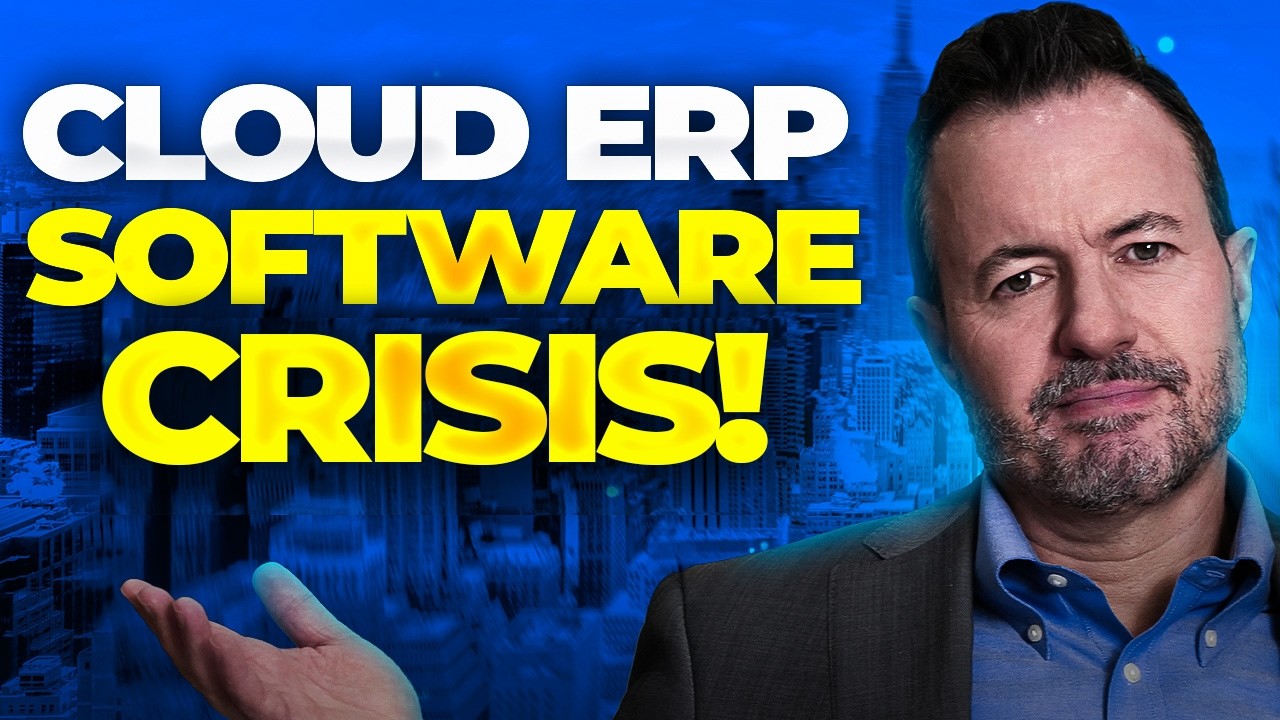

Eric is recognized globally as a leading voice in digital transformation and ERP strategy. Over the past two decades, he has helped hundreds of organizations – including Nucor Steel, Fisher & Paykel Healthcare, Kodak, Coors, Boeing, and Duke Energy – define their technology roadmaps, modernize complex operations, and deliver real business value from large-scale transformation initiatives.
As Founder and CEO of Third Stage Consulting, Eric leads an independent, technology-agnostic advisory firm focused on helping clients navigate the shift from traditional ERP to more flexible, AI-enabled Digital Enterprise Operations (DEO) models. His work spans ERP selection, implementation quality assurance, organizational change, and operating model design across a wide range of industries and geographies.
Eric is also a prolific thought leader, known for his pragmatic takes on AI, cloud, and enterprise software trends, as well as his firm’s benchmark research and frameworks for de-risking transformation. He is dedicated to helping executive teams cut through vendor hype, make confident investment decisions, and successfully reach the “third stage” of their digital evolution.