If the health and economic disruptions of 2020 have taught us one thing about business, it is that supply chains are not well conditioned for changing times. All the business process management, supply chain integration, and SCM software efforts of the past seem a bit irrelevant in light of today’s supply chain challenges.
The challenges of global supply chain management in 2020
Most manufacturing and distribution companies are facing one of two challenges related to their global supply chains:
- They are facing declining and / or massive changes to customer purchasing patterns that were not predicted, or
- They are facing dramatic increases in demand in ways that even the top ERP systems or most refined processes could have predicted.
While no one could have fully anticipated the magnitude and degree of disruption we are facing in 2020, it is exposing vulnerabilities in global manufacturing and distribution supply chains.
For example:
Manufacturers are finding that their vendor bases are too concentrated. This leads to a need to diversify to avoid the disruptions they are facing in 2020. For example, many manufacturers are finding that they depended too much on vendors concentrated in one region (e.g. China), which creates risk when there is a health, economic, or geopolitical disruption to vendors in those regions. The ability to diversify procurement to multiple vendors needs to be balanced with the potential cost efficiencies of a more concentrated vendor base.
Manufacturers are realizing the value of supply chain flexibility. Some supply chains were better able to adapt to the changes of 2020 better than others. The ones that weren’t able to respond as quickly are finding the need to build flexibility into their supply chains. They need to find better ways to optimize their supply chains to respond to and plan for evolving needs of their global customer bases and supply chains.
Big ERP systems or SCM software may or may not be the answer. Addressing these needs may or may not involve massive technology initiatives such as ERP implementations. Business process improvements or organizational changes are often lower-cost, lower-risk, and higher-value options for manufacturers. We are seeing many manufacturers take a two-phase approach to 1) address short-term needs that provide immediate relief and improvement, and 2) do so within the context of a broader long-term digital strategy and roadmap.
How to build your supply chain management and transformation for the future
This recent YouTube video outlines some strategies that you can do to improve your supply chain and SCM software initiatives in the short-term:
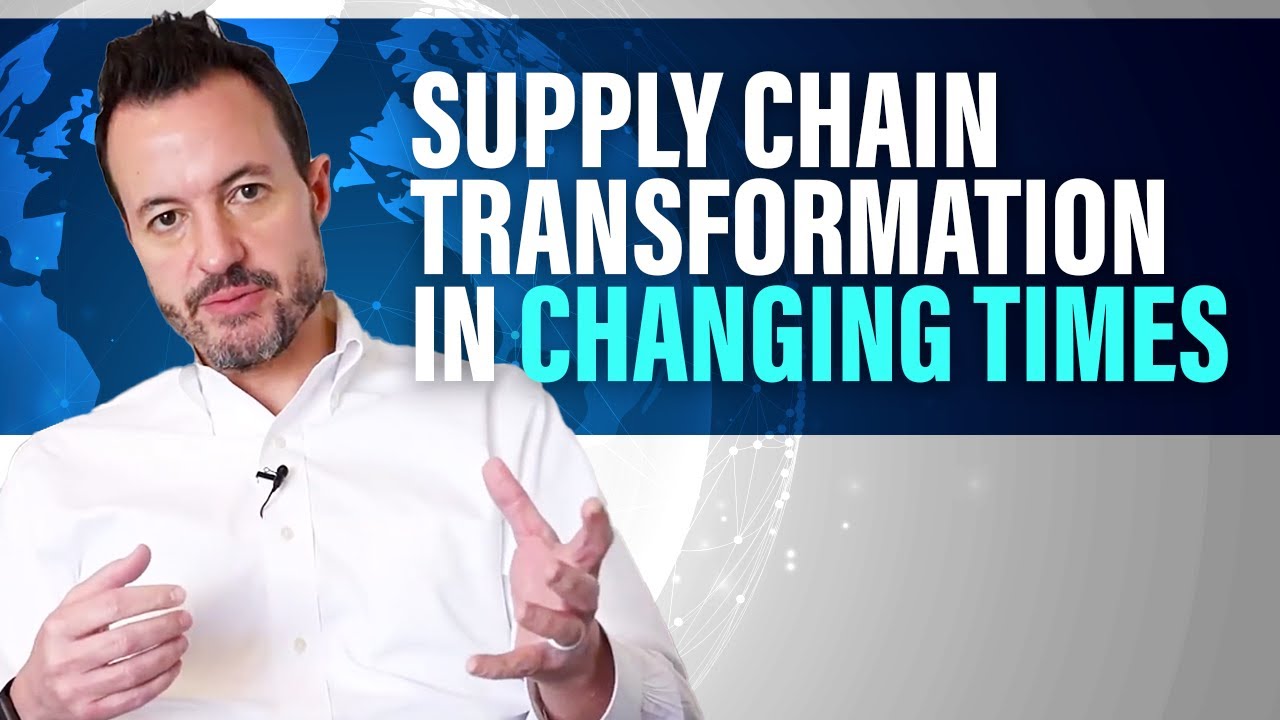
The idea is to navigate today’s current realities while balancing with longer-term and more strategic needs that future-proof your supply chain for the evolving landscape that we are in.
I hope this provides some ideas as you look to ways to improving the short- and long-term needs of your supply chain management efforts. Please feel free to contact me if you would like to discuss your SCM, ERP, or digital transformation efforts – my team and I are happy to be an independent and informal sounding board as you navigate your transformation realities of today!

Eric is recognized globally as a leading voice in digital transformation and ERP strategy. Over the past two decades, he has helped hundreds of organizations – including Nucor Steel, Fisher & Paykel Healthcare, Kodak, Coors, Boeing, and Duke Energy – define their technology roadmaps, modernize complex operations, and deliver real business value from large-scale transformation initiatives.
As Founder and CEO of Third Stage Consulting, Eric leads an independent, technology-agnostic advisory firm focused on helping clients navigate the shift from traditional ERP to more flexible, AI-enabled Digital Enterprise Operations (DEO) models. His work spans ERP selection, implementation quality assurance, organizational change, and operating model design across a wide range of industries and geographies.
Eric is also a prolific thought leader, known for his pragmatic takes on AI, cloud, and enterprise software trends, as well as his firm’s benchmark research and frameworks for de-risking transformation. He is dedicated to helping executive teams cut through vendor hype, make confident investment decisions, and successfully reach the “third stage” of their digital evolution.