Every digital transformation forces leaders to thread a needle: business needs and technology needs both matter, yet they often pull in opposite directions. The business wants speed, flexibility, and solutions that fit real-world operations. Information technology teams want scalability, stability, security, and a tech stack they can actually support over time.
Neither side is “wrong.” The friction shows up when those priorities collide, decisions get delegated downward, and the project team is left to “fight it out” without clear executive direction.
Below are the most common business-versus-IT conflicts I see in ERP and digital transformation programs, plus a practical way to navigate them before they turn into delays, budget overruns, or adoption failures.
Conflict #1: Business flexibility vs. IT standardization
Business leaders usually start here:
- “We need flexibility.”
- “We need to respond to customers faster.”
- “We need to adapt to new regulations, new markets, and new products.”
- “We need technology that bends with the business.”
Information technology teams often start here:
- “We need scalability.”
- “We need fewer systems, not more.”
- “We need simpler integration, simpler security, simpler support.”
- “We need less customization, fewer exceptions, fewer one-offs.”
That difference is why conversations about cloud solutions, configuration, customization limits, and “standard process” become so charged. A simplified, standardized environment can reduce technical complexity, but it can also restrict the business in the areas where differentiation actually matters.
The decision is not “flexibility vs. control.” The real decision is: where does the business need flexibility, and where should it accept standardization?
If leadership does not define those boundaries early, the team defaults to whichever side has the loudest voice or the most leverage in the moment.
Conflict #2: Technology-first thinking vs. outcome-first thinking
Information technology leaders often have a strong point of view on what the environment “should” look like:
- cloud-first strategy
- one platform vs. best-of-breed
- a preferred vendor ecosystem
- an AI-first roadmap
- a “single system” architecture philosophy
That is understandable. It is literally their job to pay attention to trends, risks, and technical debt.
Business leaders usually care far less about the label and far more about the result:
- “Can we close the books faster?”
- “Can we ship on time?”
- “Can we forecast better?”
- “Can we reduce errors, rework, and manual effort?”
This is where projects go sideways. If the program starts with a technology decision, the business tends to feel like it is being asked to conform to a tool rather than being supported by a tool. That quickly turns into resistance, workarounds, and a culture of “this was done to us.”
The healthier sequence is the opposite: define business outcomes first, then choose technology that supports them.
Conflict #3: Cutting-edge tech vs. proven tech that actually works
Information technology teams are usually closest to emerging trends. They see the innovation first. They want the organization to modernize, and they want to reduce long-term risk by keeping the environment current.
Business leaders ask a simpler question: Does it work for us?
That question matters because “new” does not always mean “better” for day-to-day execution. Plenty of organizations move from mature, stable legacy environments into newer platforms that look modern but create functional trade-offs, missing capabilities, or operational disruption.
A transformation should modernize the business, not just modernize the architecture.
Conflict #4: Operating expense focus vs. capital expense mindset
This tension shows up most clearly when cloud subscriptions enter the picture.
Information technology leaders often prefer subscription models because they can:
- move infrastructure off internal teams
- shift upgrades to the vendor release cycle
- reduce dependency on internal hardware
- align spending to usage over time
Many business leaders, especially in asset-intensive industries, think differently:
- “How do we depreciate assets?”
- “How do we maximize the life of what we already paid for?”
- “How do we avoid long-term cost creep?”
This is not simply a finance debate. It is a strategy debate. Subscription models can be useful, but they also shift cost into an ongoing operating expense that can grow year over year.
If leadership does not reconcile this early, the project ends up trapped in a cycle of “cloud is the strategy” versus “cloud is the expense problem.”
Conflict #5: IT cares deeply about the “what,” business cares about the “whether”
Information technology teams often care deeply about the specific tools, vendors, and architecture. Business leaders often care about one thing:
Will this enable the business to operate better?
This mismatch creates tension during selection, design, and change management. It also drives a common failure pattern: the project becomes “an IT initiative,” and the business treats it as optional.
That is not an adoption problem. That is a leadership problem.
How to navigate these conflicts without turning the project into a turf war
These conflicts do not get resolved by better meeting notes or a larger project plan. They get resolved by governance and executive clarity.
Here is what consistently works:
1) Use a balanced executive steering committee
A transformation cannot be run as an IT-only project or a business-only project. A healthy steering committee includes leadership from operations and finance, not just technology.
Shared sponsorship also prevents the CIO from becoming the default “owner” of decisions that are actually business decisions.
2) Make the trade-offs explicit early
The team needs clear direction on questions like:
- Where do we require flexibility, and where do we enforce standardization?
- Which processes can be “good enough,” and which ones drive competitive advantage?
- Which capabilities must work on day one, and which can be phased?
When leaders avoid these calls, the project team gets stuck debating them midstream, when every delay costs real money.
3) Tie every technology decision to a business outcome
If the team cannot connect a platform choice to measurable outcomes, the choice is probably being driven by preference, comfort, or vendor pressure.
4) Stop delegating executive decisions to the project team
Project teams can execute. They cannot resolve strategic conflict without executive backing. Leadership needs to stay involved, make decisions, and own the consequences.
A final thought
Business-versus-IT tension is normal. The damage happens when leadership treats that tension as a “project team problem” instead of what it is: a strategic decision-making problem.
When executives define the trade-offs early and govern them consistently, the project moves faster, adoption improves, and the technology starts serving the business instead of the other way around.
If you’ve lived through these conflicts, which one shows up most in your organization: flexibility vs. standardization, tech-first vs. outcome-first, or something else?
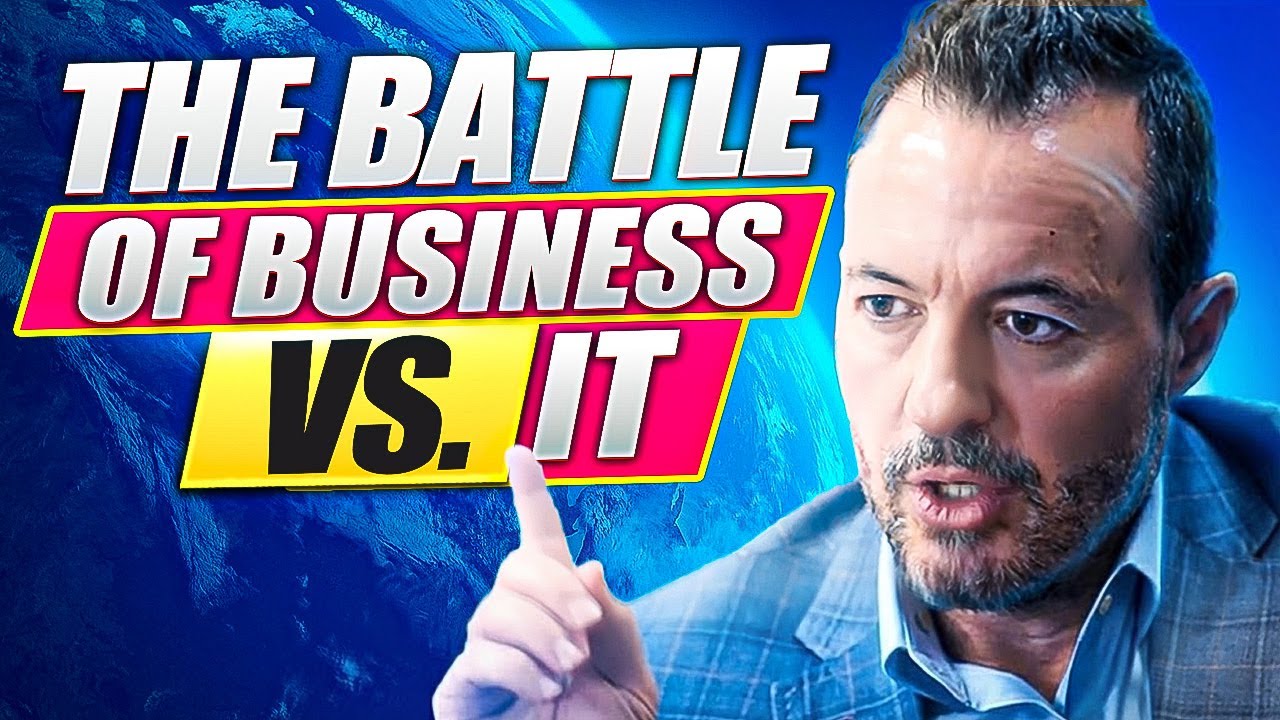

Eric is recognized globally as a leading voice in digital transformation and ERP strategy. Over the past two decades, he has helped hundreds of organizations – including Nucor Steel, Fisher & Paykel Healthcare, Kodak, Coors, Boeing, and Duke Energy – define their technology roadmaps, modernize complex operations, and deliver real business value from large-scale transformation initiatives.
As Founder and CEO of Third Stage Consulting, Eric leads an independent, technology-agnostic advisory firm focused on helping clients navigate the shift from traditional ERP to more flexible, AI-enabled Digital Enterprise Operations (DEO) models. His work spans ERP selection, implementation quality assurance, organizational change, and operating model design across a wide range of industries and geographies.
Eric is also a prolific thought leader, known for his pragmatic takes on AI, cloud, and enterprise software trends, as well as his firm’s benchmark research and frameworks for de-risking transformation. He is dedicated to helping executive teams cut through vendor hype, make confident investment decisions, and successfully reach the “third stage” of their digital evolution.